Ahhh… I love humanity and I love the world.
Immerse yourself:
While watching the Apple keynote introducing the iPad 3, Clemens had to install Windows on a 2.5″ drive that we had no fitting enclosure for. So he just stuck it in the MacPro and held it up with a roll of toilet paper. Try doing that with an iPad 3
In a way I think the development to a Post PC world is a terrible thing because it won’t give the kids the possibility to experiment with and alter devices to come up with things that they weren’t designed for.

So deutlich habe ich es ja selten gehört.
YouTube ist also gar keine Hosting-Plattform sondern eine Verhaltensanalyse Maschine für direktere Werbung. Ist ja interessant.
Diese Erkenntnisse sind bares Geld wert und wenn dem so ist und Google diesen Wert verkauft, was ist dann so schlimm daran, die Urheber-Crowd an den Einnahmen zu beteiligen?
Aus dem Artikel:
Wie funktioniert das?
Ein klassisches Beispiel ist unsere Videoplattform Youtube. Wenn ein Nutzer virtuell mit anderen bei Google angemeldeten Nutzern verbunden ist, erkennen unsere Algorithmen, welche Inhalte sich die Freunde auf Youtube anschauen. Das erzeugt ein Signal, um dem Nutzer wiederum bessere Empfehlungen geben zu können, selbstverständlich immer anonymisiert. Wir nennen das, den „social graph“ integrieren, also das soziale Geflecht, das einen Nutzer umgibt. Darum geht es bei Google +.
Google-Chef Schmidt: „Jeder Mensch will online sein“ – Netzwirtschaft – FAZ.
Eines der gängigen Argumente für ein neues Urheberrecht (wie auch immer das dann ausgestaltet werden soll, mit Details halten sich nämlich alle dann diskret zurück!) ist, dass man den großen Organisationen und Verwertern die Macht nehmen muss.
Fakt ist aber, dass wenn das Urheberrecht “modernisisert” (bedeutet dann immer: geschwächt) werden soll, werden nicht die Verwerter entmachtet, sondern der Urheber selbst. Er hat nämlich dann noch weniger Handhabe im Umgang mit seinen Rechten und wie er diese an Verwerter lizensieren kann und mit welchen Mitteln er diese Lizenzabkommen dann durchsetzen kann. Auch gibt es Gesetze über angemessene Vergützung, die den Urheber davor schützen, dass große Unternehmen ihre Marktmacht ausspielen und den Urheber unter Druck setzen.
Das alles gilt aber natürlich nur hier in Deutschland. Deutschland bietet sozusagen einen sehr guten Schutz des Urhebers, während sich Kreative in den USA nach solchem Schutz die Finger lecken. Nicht allerdings Unternehmen, die gerne verwerten wollen aber mit dem Urheber als Individuum möglichst gar nicht sprechen möchten. Für die sind die Forderungen der Digitalen Copyleft Bewegung ein Segen, wie er besser gar nicht sein könnte. Dieser Umstand wird aber von den meisten Menschen übersehen.
Sie sehen nicht den einzelnen Urheber, dessen Schaffen nämlich sehr wohl den Schutz geniessen sollte, sondern immer nur die böse Verwerterkrake.
Ein schwaches Urheberrecht wird alles einfacher machen für die Verwerter und auch hier vor allem für die neuen Verwerter aber die Existenz der Individuen abwürgen. Die Medienindustrie hat die Individuen schlecht beteiligt aber die neuen Unternehmen beteiligen gar nicht (Google, YouTube, Facebook, reddit, etc…)
In meinem Berufsleben erlebe ich täglich genau dieses Problem: ich stehe als einzelner Rechteverkäufer großen Organisationen gegenüber, die mich unter Druck setzen mit ihrer Marktmacht. In diesem Dreieck (Urheber – Verwerter – Konsument) brauche ich den Schutz der Allgemeinheit und das deutsche Recht gibt mir diesen Schutz. Wenn der aber wegfällt, habe ich gar keine Verhandlungsposition mehr.
I used to be on this guys arguments side.
But I have been taken advantage of by people enough times that I want to know that I have the option of protecting my rights against large corporations and exploitative dishonest people.
If you weaken individual protection and you’ll strengthen the large organisations.
We have a completely different law in Germany. It is not even called copyright it is called creatorright. It gives me power to demand things from TV stations and everything else.
The weak American copyright system is being used as an argument to make things worse than they are everywhere else.
I don’t agree with the big media companies, but I do firmly believe that we as individual creators desperately need protection and a way to enforce our rights.
Just 6 days ago someone used my music in a way that was not agreed upon. All they had to do was include my name in the credits. No money, no restriction whatsoever except that one and they didn’t even do that. These kinds of specious people need to vanish from the culture industry and that is why we need a strong creator right.
You’ve probably come across this video of Joshua Bell busking in the Washington subway during rush hour.
To me, this video and article shows several things: first of all, people just don’t recognize greatness even if it is in front of them in the size of a mountain. But second, and this I find even more important, here is a chance to enjoy something for free, no strings attached at a level of performance that is unrivaled in the world. And yet, no one stops to listen.
Here’s my thought: what about all those people claiming that every artist should put out his/her work for free as it helps to get exposure and exposure and reaching people is what matters? It seems to me that if something is free, won’t even stop to take a closer look. So free seems to equate “not interesting enough to check out”.
Now on the other hand, if there is something with a value attached to it, suddenly the argument is: no, no, no, no, I can’t possibly be expected to pay for something. I’ll just grab it from my friend and be done with it. Does anyone else see the terribly destructive hypocrisy in this?
So please, all you people out there who claim to wanting to help creators by forcing them to just give away their work for free: think again. And for yourself this time without the “screaming free industry” (I’m looking at you, Lawrence Lessig) yelling in your ear about how modern that attitude supposedly is.
Never, in a thousand years would I have imagined, that the City Song that the absolutely wonderful Stephanie Forryan and I wrote would have been connected to a viral internet sensation such as the wonderfully crazy “Iron Sky” film by finnish director Timo Vuorensola. All music in the Berlinale Stories over on MyVideo is by me.
Berlinale Stories Folge 8:
Berlinale Storys Teil 8- Exklusives Interview Juli… – MyVideo
Berlinale Stories Folge 9:
Berlinale Storys Teil 9 – Exklusives Interview Jul… – MyVideo
Let’s pause for a moment and think of someone disclaiming: “I will not move”. It’s an incredibly powerful message.
Rest in Peace!!
http://en.wikipedia.org/wiki/Rosa_Parks
Heute hat sich der Vertreter der CDU in der Enquete Kommision “Internet und digitale Gesellschaft” mächtig aus dem Fenster gelehnt und wurde dafür von der Netzgemeinde (wenn das denn die sind, die immer so wirklich laut überall schreien…) ordentlich rangenommen.
Ich muss sagen, dass mir die Bullies aus “dem Netz” langsam schon ein bisschen auf die Nerven gehen: sie sind meist in ihrer Message nicht klar, sie glänzen hauptsächlich dadurch, dass sie andere verhöhnen, Mitgefühl oder Veranwortungsbewusstsein existiert fast nicht und letzten Endes geht es doch nicht um die heeren Ziele (freie Meinungsäußerung, Freiheit, Datenschutz, kürzere Patentlaufzeiten damit in den developing countries Generika angeboten werden können), die sie so gerne vorgeben, sondern am Ende des Tages geht es leider darum, dass man sich Breaking Bad und The Big Bang Theory umsonst anschauen kann. Und zu diesem Zweck ist dann auch jedes Mittel recht und man dringt dann auch gleich mal in fremder Leute CMS ein (klar, darf jemand wie Heveling natürlich kein so einach zu ratendes Passwort haben), aber vom Prinzip her, hat das mit Respekt vor freier Meinungsäußerung eben genau gar nichts mehr zu tun. Da sagt jemand was, das jemand anderem nicht passt und BÄM! bekommt er mit voller Wucht alles ab, nur keine politische Diskussion.
Schade, aber zeigt einfach deutlich, wo die Prioritäten liegen: Im egoistischen Dissenz und nicht darin, sich zu überlegen, wie denn eine Gesellschaft sowohl ihre Urheber schützt, als auch wirtschaftliches Arbeiten ermöglicht.
Und die großen Medien spielen das Spiel auch noch mit. Ist ja klar, kann man sich bei den jungen Wilden ein paar brownie points einheimsen.
Pathetic.
Gehe jetzt heim.
Tonight I had the dream about something, that would solve the problems of both the content industry and the free speech movement.
It would add so much entertainment value to the internet if people instead of posting the actual songs/pictures/films/books/comics that they like would just sing the the songs, draw the pictures themselves, reenact the films or write a summary of the book themselves and then link back to the creators website (or some store like Amazon or iTunes, earning referral money in the process btw.) to get to the full version.
So let me demonstrate:
If I thought that it would be clever to reference the Sex Pistols “God Save The Queen” (from memory which makes it even more fun, because it’s probably way off) in the context of a bee hive I could be posting it like this:
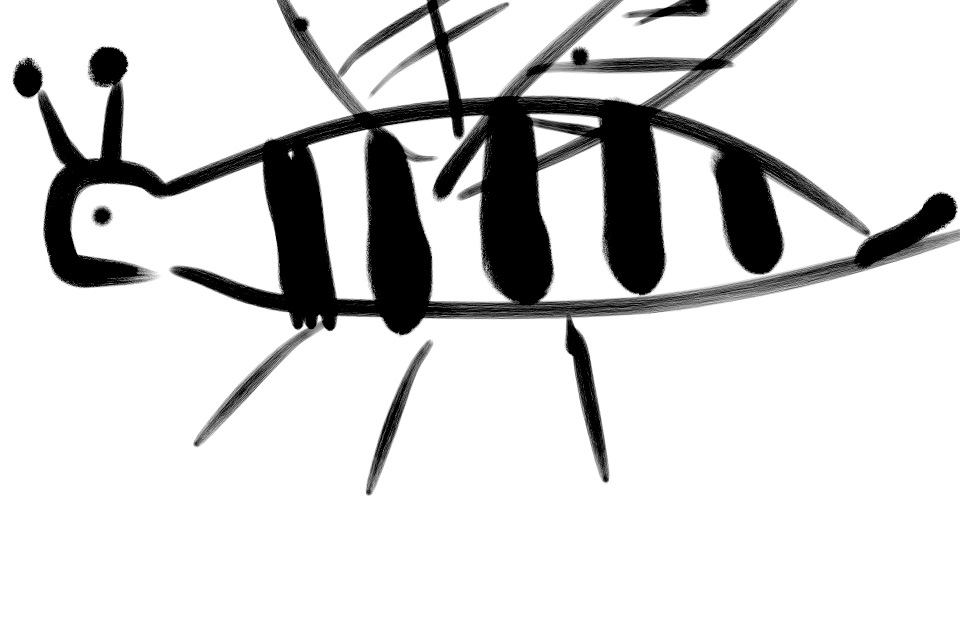
Get the real song here: